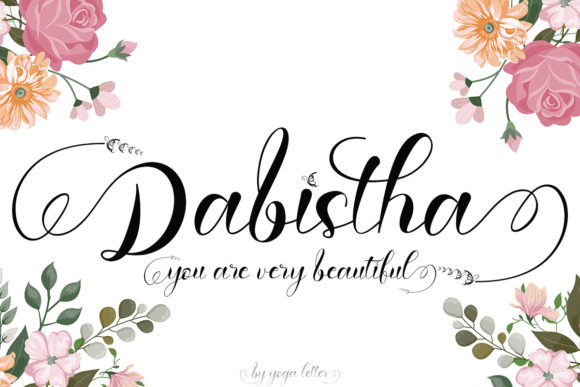
Dabistha: A Handwritten Font That Elevates Design with Elegance
Dabistha is a delicate and elegant handwritten font that brings a unique charm to any design project. With its distinct and well-rounded letters, this font stands out as a masterpiece in the world of typography. Whether you're creating logos, invitations, or digital content, Dabistha offers a versatile style that can transform your work into something truly spectacular.
What Makes Dabistha Special?
The beauty of Dabistha lies in its natural, flowing script that mimics the elegance of handwriting. Each letter is carefully crafted to ensure readability while maintaining an artistic flair. This makes it ideal for both casual and professional use, allowing designers to express creativity without sacrificing clarity.
One of the standout features of Dabistha is that it is PUA encoded. This means users can easily access all the glyphs and swashes, giving them more control over their designs. The ability to customize the font with special characters adds another layer of versatility, making it suitable for a wide range of creative applications.
Key Features of Dabistha
- Handwritten Style: Mimics natural handwriting for a personal touch.
- Well-Rounded Letters: Ensures readability while maintaining elegance.
- PUA Encoding: Provides access to a variety of glyphs and swashes.
- Versatile Use: Suitable for both digital and print media.
Where Can You Use Dabistha?
Dabistha's adaptability makes it a great choice for various design projects. Here are some common uses where this font shines:
- Invitations and Cards: Perfect for wedding invitations, birthday cards, and other personal messages.
- Logos and Branding: Adds a unique, stylish element to logos and brand identities.
- Web Design: Ideal for headings, call-to-action buttons, and other elements on websites.
- Print Media: Works well for magazines, brochures, and other printed materials.
- Stationery and Packaging: Enhances the aesthetic appeal of stationery and product packaging.
Who Benefits from Using Dabistha?
Designers, business owners, and creators who want to add a personal touch to their projects will find Dabistha particularly useful. Its elegant style appeals to professionals looking to make their designs stand out, while its readability ensures that it remains accessible to a broad audience.
Business owners can use Dabistha for branding purposes, creating a memorable visual identity that resonates with customers. Creators, such as writers and artists, may also appreciate the font's ability to enhance the visual presentation of their work.
Strengths and Considerations
While Dabistha has many strengths, it's important to consider how it fits into different design contexts. One of its greatest advantages is its ability to convey emotion and personality through typography. This can be especially effective in marketing and advertising, where first impressions matter.
However, like any font, Dabistha may not be suitable for every situation. It's best used in projects where a handcrafted feel is desired rather than in formal documents that require strict typographic conventions. Additionally, while the PUA encoding provides flexibility, users should be familiar with accessing these features to fully utilize the font's capabilities.
Real-World Applications of Dabistha
Let's take a look at some real-world scenarios where Dabistha could be beneficial:
- Wedding Invitations: Dabistha's elegant script can add a romantic and personalized touch to wedding invitations, making them more memorable.
- Product Packaging: For boutique brands or artisanal products, using Dabistha on packaging can create a sense of exclusivity and craftsmanship.
- Blog Headers: Bloggers can use Dabistha for headers and titles to give their content a more engaging and visually appealing format.
- Business Cards: Incorporating Dabistha into business cards can help professionals stand out and leave a lasting impression.
Evaluating Dabistha for Your Needs
Before deciding to use Dabistha, it's important to evaluate whether it aligns with your specific design goals. Ask yourself the following questions:
- Is the tone of my project appropriate for a handwritten font?
- Will Dabistha maintain readability in the context of my design?
- Do I have the necessary tools or knowledge to access and use the PUA-encoded glyphs?
- Does Dabistha complement the overall aesthetic of my project?
By considering these factors, you can determine if Dabistha is the right choice for your needs. It's always a good idea to test the font in different contexts before finalizing your design to ensure it meets your expectations.
Conclusion: Embrace the Beauty of Dabistha
Dabistha is more than just a font; it's a tool that allows designers to express creativity and individuality in their work. With its elegant style, readability, and versatility, it's a valuable addition to any designer's toolkit. Whether you're creating a logo, designing a website, or crafting a personal invitation, Dabistha can help bring your vision to life.
As you explore the possibilities of Dabistha, remember to consider how it fits within your design goals and audience preferences. By doing so, you can harness the full potential of this remarkable font and create designs that are both beautiful and meaningful.